
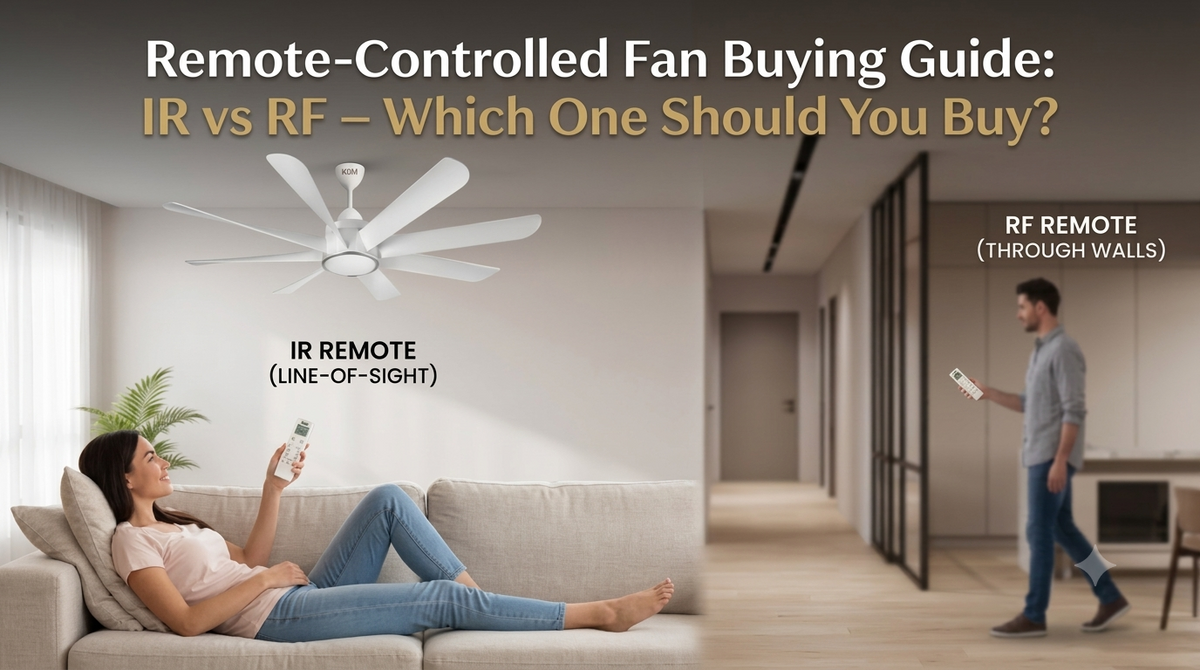
A remote-controlled fan brings speed and comfort adjustments within easy reach, without requiring a visit to the wall switch. However, the way a remote communicates with the fan varies by technology.
Understanding the difference between an IR and RF remote fan can help you decide which option is better suited to your room and everyday routine.
What Is the Difference Between an IR Remote and an RF Remote for Ceiling Fans?
An IR remote fan works on infrared signals, much like a television remote. The remote needs to point directly at the fan's receiver, and nothing can block that path.
An RF remote fan, on the other hand, uses radio frequency, which doesn't rely on line of sight at all. You could be in the next room and still change the fan speed.
Why Does This Distinction Matter More Than It Seems?
A remote-controlled fan with IR technology tends to work fine in smaller, open rooms where the receiver is easy to see. But the moment there's a wall, a wardrobe, or even a large piece of furniture in between, it starts to struggle, and that's really where RF pulls ahead.
Which Remote Type Works Better Through Walls: IR or RF?
RF uses radio waves, not light waves, so it can pass through walls, cupboards and other obstacles without losing the connection. This feature can be particularly useful in an open floor plan home or when the fans are out of sight from where people usually sit.
A Practical Example
Think of a fan installed above a loft bed or tucked into a corner behind a partition. An IR remote fan would likely need constant repositioning to get a signal through. An RF remote fan just works, regardless of where you're standing.
Is an RF Remote Ceiling Fan Better Than an IR Remote Fan?
In terms of pure convenience, yes. RF generally provides a more consistent experience in everyday use. That said, "better" also depends on budget and how the fan is being used. If the fan sits in an open room with a clear view of where people usually sit, an IR remote may work perfectly well and cost less.
Where Does the Extra Convenience Come From?
A ceiling fan with an RF remote typically reaches further and works without needing to face the fan: up to about 20 feet, compared to roughly 10 feet with IR, and without the need to point. That range and flexibility also make RF a better base for extra features.
Kühl's Wi-Fi-enabled models, like the Platin, Luxus, and Polariz series, take the technology further: Our app lets you control several fans from one account, share access with family members, and pair with a smart switch if you'd rather skip the remote altogether. All of this is built on our BLDC motor technology, ensuring smart features are paired with quiet operation and efficient performance.
Should I Buy an IR or RF Remote-Controlled Fan for My Home?
If your home has an open layout with fans clearly visible, IR is a good choice. RF is worth the small premium if you have rooms with partitions, false ceilings, or fans that aren't in line of sight.
The Smart Way to Choose a Ceiling Fan Remote
Whether you choose IR or RF depends on your home layout and how convenient you want your daily life to be. Neither is better than the other; they just fit different setups.
If you're weighing these options for a new fan, it's worth exploring Kühl's ceiling fan range, where thoughtful remote and smart control options are built around genuinely efficient engineering.
FAQs
-
What is an IR remote in a ceiling fan?
Ans. It’s a TV remote-style infrared remote, so it needs line of sight to the fan receiver to work.
-
What is an RF remote in a ceiling fan?
Ans. It is remote-controlled with radio frequency signals, so it can operate the fan through walls or without line of sight.
-
Which remote fan works without a direct line of sight?
Ans. RF remote fans do. Since they rely on radio waves rather than infrared light, obstructions between the remote and the fan aren't an issue.
-
Does an RF remote fan cost more than an IR remote fan?
Ans. Slightly, in most cases. The difference is usually small and often justified by the added convenience RF offers.


